Thursday, January 3, 2013

Govt. is still less corrupt, find how Restaurants are stealing your money.

Hi All,
About Service Tax..... how the restaurants loot your money ... Be aware
Ramanathan Hariharan updated his status: "Surprisingly after reading about the "Service Tax", I strongly decided to share this information to everyone.
This happened at the restaurant. Let me explain.
We had been to several restaurants recently. I observed that "service tax" has been mis-used and charged to the customers like you and me.
Let me give an example.
Food and Beverage = Rs. 1000.00
Service Charges @ 10% = Rs.100.00 (10% on the Food and beverage amount)
Service Tax @ 4.94% = Rs.54.34 (4.94% on F&B + Service Charges)
VAT @14.5% = Rs. 145.00
Total = Rs.1299.34

As per the definition - "Service Tax can be charged only for the services provided to the customer".
Now, see what is happening here in the abovesaid example.
Service Tax should be charged only on the Service Charges amount i.e Rs.100 and not on the entire amount (1000+100).
In this example, the customer should be charged only Rs 4.94, whereas he has been charged
Rs. 49.00 extra.
Where does this money go? Only the restaurant owner and the chartered accountants who work for them know.
So, I have started asking them the questions - and surprised to see the reactions from the famous restaurants. Either they say: Mam we cannot change the format of the bill - so , we will recalculate and tell you the revised amount. You may pay only that.
Mam, you do not need to pay the Service Tax amount itself.
I now have 3 to 4 restaurant bills, for which I have paid only the service tax - on the service charges and not on the total amount.
Every bill must carry the TIN number and Service Tax Number, if they charge it. So, I ask for the Service tax number if it is not available in the receipt that they provide.
We cannot go to any government official and ask them to get this right - because of our system.
Please remember - we cannot change any political leader - but we can change ourselves. If we change ourselves - things will change.
Please do share this with every one of your friends and known people.
Ask for the right tax calculation and pay only the tax which is supposed to be paid. Verify every bills and receipts that you make payment on.

Regards
Ashish Gupta

Monday, September 24, 2012

No roaming charges from next year: Sibal

Telecom Minister Kapil Sibal Monday said that from next year mobile phone users will not have to pay roaming charges.

When asked when does the government plan to remove roaming charges as per the National Telecom Policy 2012, Sibal said it will be free from next year.

In May this year, the  cabinet approved a new telecom policy that seeks to do away with roaming charges throughout the country.

Currently, a user pays an extra amount called roaming charge while making or receiving calls in a circle outside his home network.

The new policy, approved in May, paves the way for free roaming and nationwide mobile number portability.

The minister also said the new policy would replace the older regulation, which has been in effect for more than 12 years now and provides a predictable and stable policy regime for a period of nearly 10 years.

Sunday, September 23, 2012

Windows 8: Microsoft's 'New Coke'


The tech giant's new operating system is a bold step into a future where tablets and traditional PCs blend together. But is it too bold?


Will the launch of Windows 8 next month be Microsoft's "New Coke" moment? Like when Coca-Cola introduced a new version of its celebrated drink in 1985, Microsoft's latest iteration of its ubiquitous PC operating system may be too radical a departure from past versions, potentially setting off a revolt among consumers, as New Coke it did for Coca-Cola. And if confusion and bad publicity cloud the launch of Windows 8, the company's plan to take on Apple and Google in the battle to control mobile and tablet markets could be jeopardized.
Microsoft (MSFT) has been criticized for years for its lack of innovation compared to rivals down in Silicon Valley. Besides the launch of its Xbox gaming system, Microsoft has largely failed to come to market with a truly game-changing product since the launch of its Windows 95 operating system seventeen years ago. The company's current Windows phones have struggled competing with Google (GOOG) Android and Apple's (AAPL) iOS. The company has also shredded billions of dollars to catch up with Google's lead in search. Its attempts to make inroads in the internet advertising market with the $6.3 billion acquisition of aQuantive in 2007 was a rout that ultimately forced the firm to write the value of the company down to a mere $100 million.
The aQuantive write down earlier this year forced Microsoft to report its first quarterly loss ever, a public relations stain. One could argue that Microsoft's greatest feat in the past few years was walking away from its totally misguided $45 billion bid to take over the broken internet giant Yahoo! (YHOO) in 2008. If that deal would have gone through, Microsoft would be facing a much bigger write down than just $6.2 billion.
Despite all of its troubles, Microsoft still makes money. This is due to the continued domination of its Windows operating system and its Microsoft Office suite of products, which includes the word processing program Microsoft Word and the spreadsheet program Microsoft Excel. Windows and MS Office make up 25% and 35%, respectively, of Microsoft's total sales and a much larger chunk of its profits. Windows has a desktop market share hovering around a whopping 92%, according to NetMarketshare data. So even with its fumbles and failed ventures, the company remains relevant in the technology world as well as in the investment world, paying out a fat 3% dividend yield to shareholders.
One of the reasons why Microsoft has been able to maintain its massive market share among PC users is the widespread familiarity with Windows and MS Office in both the workplace and at home. Literacy in its major products form part of the bedrock of computing, in other words. No one likes to relearn something -- like how to open a document or shut down a computer. So while Wall Street complains about the firm's lack of innovation, users benefit from the consistency in Microsoft products.
Microsoft knows very well how sensitive users are to change. That's why on its latest operating system, Windows 7, users have the ability to customize certain menus to look like they did in previous generations of Windows. But with Windows 8, Microsoft is taking away a multitude of classic features without the ability for users to roll them back. It also adds a slew of new features that don't work very well on a traditional desktop that uses a mouse and keyboard.
It turns out Windows 8 is designed primarily for use on a touchscreen PC, an area of the market that is in its infancy. For example, in the pre-launch version of the operating system, developers and users have had a hard time figuring out how to get off the Windows 8 welcome screen to access their files. The way to do that is to flick up, a motion that is somewhat intuitive on a touchscreen, but is totally foreign using a mouse and keyboard.
Getting started is just the beginning of the nightmare. Once inside, instead of the normal Microsoft desktop, which has been around for decades, users are greeted to a bunch of colored squares floating in a black background, called "live tiles." The squares run off the screen horizontally, forcing users to flick to the right or left, or side scroll using a mouse, which is again a foreign motion for most users on a non-touchscreen device. There is one way to get to a screen that looks like a desktop, but it is missing the "start" button in the taskbar, which normally serves as the gateway to all of the computer's functions. By removing the start button, the fake desktop basically loses its primary purpose.
There has been loads of criticism about the usability of the operating system. For example, it takes three or four steps to simply shut down the computer. Important menus like "control panel" and others simply don't exist, with their functions spread out all over the floating tiles. So besides being different, the new operating system also looks inefficient. Naturally, Microsoft feels differently. "Throughout the history of computing, people have again and again adapted to new paradigms and interaction methods—even just when switching between different websites and apps and phones," Steven Sinofsky, president of the Windows and Windows Live Division at Microsoft, wrote in an extensive blog post on the history of Windows. "We will help people get off on the right foot, and we have confidence that people will quickly find the new paradigms to be second-nature."
To be fair, Microsoft was smart to develop a tablet-based operating system, but it just seems to have jumped the gun a bit. While the PC market is expected to move eventually to being touch based, the transition has barely begun and is expected to take several years to make its way through the market. The company will be launching Windows 8 on a number of touchscreen mobile phones as well as on their own tablet PC, the Microsoft Surface, which will be the first Windows-based computer to be designed by Microsoft.
Touchscreen phones and tablets are ideal launching pads for Windows 8, but forcing the operating system down the throats of PC users now, when 99% are not using touchscreen PCs, seems like a mistake. That's because the frustration users are likely to experience using Windows 8 on their PC could cause them to shun Windows 8 phones and the Surface. The fear here is that those "Live tiles" could give users the digital equivalent of PTSD, making them run in horror every time they see them.
That would be a shame because Windows 8 isn't bad running on touchscreen devices. Starting in a distant third position behind Apple and Google on the mobile platform, Microsoft needs Windows 8 to launch flawlessly if it intends on grabbing market share from either company in that critical growth market. It's hard to see how that can happen given all the negative comments that have floated up from IT professionals who have been using the pre-launch version of Windows 8 for nearly a year. The general consensus seems to be that Windows 8 would be best restricted to touchscreen devices, but that seems impossible now with the product launch only a month away.
Windows and MS Office may not be the best software in their respective fields, but they are comfortable and familiar to users, like an old glove or a sip of Coke. The Coca-Cola Company took a drumming when it took away that comfort and familiarity from consumers back in 1985 with the launch of "New Coke." But the company eventually relented, reintroducing its old formula alongside the new one three months later, calling it "Coca-Cola Classic."
Microsoft would be wise to learn from Coca-Cola's experience and should have a contingency plan ready allowing early adopters of Windows 8 to downgrade back to Windows 7 in case mass hysteria breaks out. A Microsoft spokeswoman told Fortune that companies that buy the Enterprise edition of Windows 8 will be able to downgrade to Windows 7 and that everyday consumers can get a refund on Windows 8 within the first 30 days of purchase if the software was bought from the Microsoft store.
If Microsoft can address user concerns before they panic, then Windows 8 may survive and grow strong among touchscreen devices. In the Coca-Cola case, the damage was irreparable, forcing the company to kill New Coke. The stakes in this case are much higher for Microsoft. Killing Windows 8 just because it's a bit ahead of its time would not only be a massive waste of resources, but could also set Microsoft back so far in the race to control the mobile market that it might never catch up to its competitors, leaving it trapped in the PC forever.

TV's next generation may come from China

Ice Screen, the upcoming 26-inch Android-based smart display from China's TCL, looks like the kind of TV a younger generation would appreciate.

At last month's IFA 2012 electronics show in Berlin, one of the biggest head-turning products was from China-based TCL Multimedia. The company introduced the Ice Screen, a 26-inch Android-based smart display that reportedly offers the functionality of a tablet while aiming to capture the changing TV viewing habits of the youth market. It will debut in China as part of a partnership with Chinese Internet provider Tencent as the world's first large screen mobile intelligent cloud product.

Just don't call it a television.
"It is a 26-inch large display," says Hao Yi, general manager of TCL Multimedia Emerging Market Business Center. "It is not just for TV, as the younger generation doesn't watch TV like the older generation."
While the vast majority of its business still comes from China, TCL has also looked to expand into the international TV market. The company just released its monthly sales volume for August of LCD TVs, reporting a 38.7% total year-on-year increase, with a marked increase of LED backlight LCD sets specifically. In its overseas market TCL reported an increase of 36.5% year-on-year, with notable expansion in emerging markets.
"The Chinese market is our backbone and that remains the main climber for the volume of our products," adds Yi, who noted that 50% of sales come from its home markets, while internationally the "main driver is Latin America."
Until a few years ago TCL's sets were sold in the United States under the RCA brand, but Yi says that the company changed its strategy in 2010 to focus on promoting the TCL brand instead. It has a licensing deal with Thomson in Europe. "We are investing in a new brand image, so that is why we solely run with the TCL brand in the United States and North America, while we will continue to have dual brands in Europe with both TCL and the Thomson brand," he says.
The two-prong strategy in Europe essentially comes to down to marketing TCL products to the younger audience, while focusing on Thomson for what Yi calls the "established family brand."
But even as TCL looks to North America, Europe and the emerging markets in Latin America, it continues to rededicate its efforts in mainland China, and for good reason.
"The Chinese TV market is really the growth market for Chinese TV makers," says Ed Border, TV technology analyst at IHS iSuppli. "At the moment, even as TCL expands to overseas markets, the growth forecast for Chinese TV makers is going to be domestic."
China is also now the largest TV market, with expected growth over the next few years from 47 million to 55 million sets sold annually, a number that now dwarfs the 40 million in sales generated in the United States.
TCL could also see expansion just as its rivals throughout Asia are seeing a level of retraction. "Part of the opportunity has come from the fact that the Japanese TV makers have scaled back," emphasizes Border. "Japanese brands are lowering volumes as Chinese brands are expanding."
The company is also looking at new products such as the Ice Screen to attract the youth market. While to date only a Chinese version has been announced, Yi said that the product does have international potential. The key is finding a content provider. "Tencent Holding is like MSN or Facebook in China, with 1 billion Internet users," Yi says. "But the key component in this is that the content is from the Internet. So to bring it to other markets simply requires a strong content partner."
The device certainly could appeal to the changing tastes in viewing TV, as it also has options for music downloads and Internet applications. But it still requires a connection to a cloud service, or else it is just a screen without a tuner. "It would be difficult to launch this one product for the world, because it is Android-based we don't want to bring it empty like you can with a smartphone," noted Yi.
Products such as the Ice Screen further suggest that the Chinese TV makers have overcome a prior issue of reacting to changing trends and trying to adapt to evolving markets. This, coupled with the continued low barrier of entry for TV makers, has presented an opportunity that hasn't existed in the past, and which could help TCL – which now ranks just outside the top five makers of sets according to NPD Groups' Display Search – successfully bridge its business internationally.
"The Chinese set makers are doing their job catching up in technical development that typically took the Chinese brands a years to roll out," says Paul Gagnon, director of North America TV Research at DisplaySearch. "They still lag in promoting marketing. If they can figure that out, they would have a real chance to make it big overseas."

Wednesday, September 19, 2012


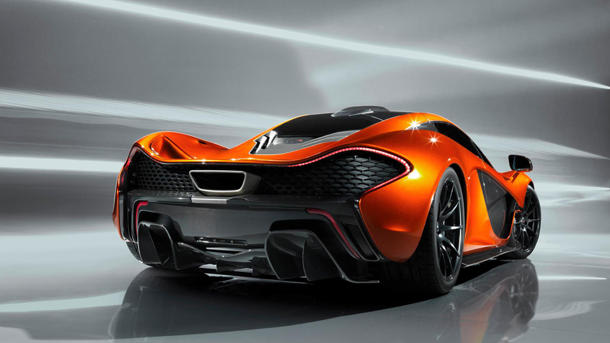
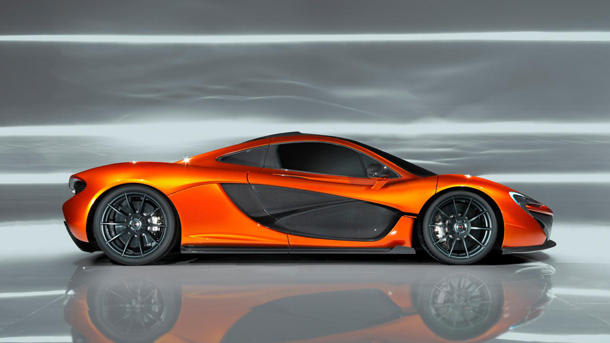
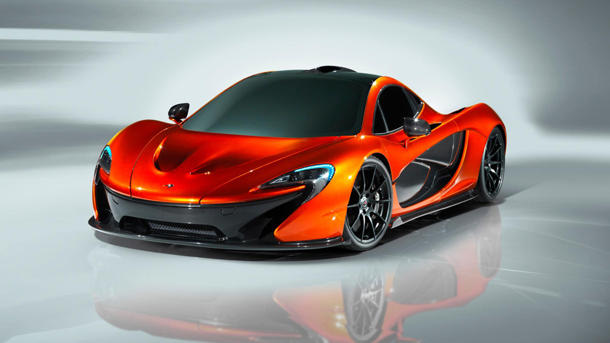
McLaren P1 supercar emerges for its first sexy shots


Welcome the McLaren P1 -- the British maker's first supercar since the all-dominating F1 of the 1990s, and from the first trio of photos McLaren released today, the P1 will be one of the most striking vehicles on the road just sitting still. We don't know yet how much power it packs or how well it will perform, but McLaren promises the P1 will be nothing less than the best, ever.


Known as McLaren designer Frank Stephenson's first clean-sheet design for McLaren after the MP4-12C, the P1 is expected to combine the 3.8-liter V8 from the MP4-12C with some kind of hybrid system that could approach 1,000 hp total. In a statement, McLaren managing director Antony Sherriff says the P1 will be "the most exciting, most capable, most technologically advanced and most dynamically accomplished supercar ever made -- not necessarily to be the fastest in absolute top speed but to be the quickest and most rewarding series production road car on a circuit."
The rest of the details will be unveiled in Paris next Thursday, with the production model expected about a year from now.


Tuesday, September 18, 2012


Apple's iPhone 5 pre-orders exceed expectations


Demand for Apple Inc's (NSQ:AAPL - News) new smartphone, the iPhone 5, has exceeded initial supply, making it the fastest-selling iPhone ever and pushing the delivery date for some pre-orders to next month.
Apple said on Monday that pre-orders for the new mobile device surpassed 2 million in the first 24 hours. A majority of pre-ordered phones will be delivered as planned by September 21, but many will not be delivered until October, it said.
Pre-orders "have shattered the previous record held by iPhone 4S, and the customer response to iPhone 5 has been phenomenal," said Philip Schiller, Apple's senior vice president of Worldwide Marketing.
It is not unusual for Apple products to sell out the first day. Orders for the previous iPhone, the 4S, the last product the company introduced before the death of co-founder Steve Jobs, surpassed 1 million in the first 24 hours, beating Apple's previous one-day record of 600,000 sales for the iPhone 4.
Apple's U.S. store, at www.apple.com, on Monday morning showed pre-orders for the iPhone 5 would take two to three weeks to ship.
AT&T (NYS:T), the No. 2 U.S. mobile service provider, said it set a sales record with the iPhone 5 over the weekend, making it the fastest-selling iPhone the company has ever offered.
AT&T did not disclose how many iPhones it sold but said the iPhone 5 was still available for pre-order and would go on sale September 21 at AT&T retail stores.
The phone's other carriers, Verizon Communications Inc (NYS:VZ - News) and Sprint Nextel Corp (NYS:S), also showed similar delays in shipping the phone.
Topeka Capital Markets analyst Brian White said demand was well above expectations.
"Given the much stronger-than-expected iPhone 5 pre-order sales, we expect a meaningful jump in the three-day sales results for the iPhone 5 compared to the over 4 million iPhone 4S weekend sales last year," he said.
Although more consumers were opting for the pre-order method, White still expects long lines Friday when the phone goes on sale in stores.
Apple began taking orders for the iPhone 5 at midnight Pacific time September 14 (0700 GMT September 15). Shipping dates for the slimmer, faster smartphone slipped by a week within an hour of the start of pre-orders.
Apple previously said it would start shipping the iPhone 5 by September 21 in the United States and most of the major markets of Europe such as France, Germany and the UK. It goes on sale September 28 in 22 other countries.
Analysts have forecast that more than 30 million iPhones, including older models, will be sold by the end of September. Sales of iPhones account for more than half of Apple's revenue.
Shares of Apple were up less than 1 percent at $694.88 in premarket trading on Monday. They closed at $691.28 on the Nasdaq on Friday.
Incredible INDIA...
Place- Jamshedpur, India.

Enough With Post Of Foreign Technology.. Can Any Foreign Nation Do This...